¶ Invisible Architecture
← Invisible Architecture | Invisible Architecture →
Index Entry
Invisible Architecture:
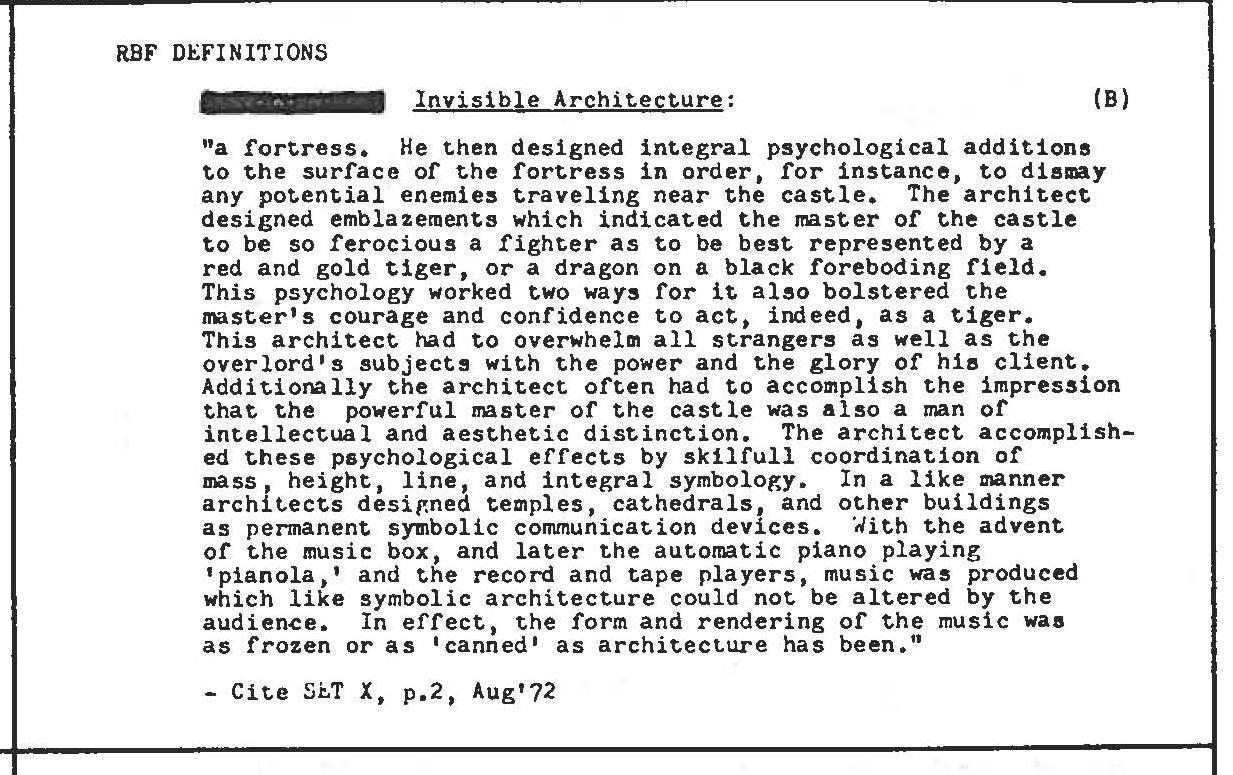
“a fortress. He then designed integral psychological additions to the surface of the fortress in order, for instance, to dismay any potential enemies traveling near the castle. The architect designed emblazements which indicated the master of the castle to be so ferocious a fighter as to be best represented by a red and gold tiger, or a dragon on a black foreboding field. This psychology worked two ways for it also bolstered the master’s courage and confidence to act, indeed, as a tiger. This architect had to overwhelm all strangers as well as the overlord’s subjects with the power and the glory of his client. Additionally the architect often had to accomplish the impression that the powerful master of the castle was also a man of intellectual and aesthetic distinction. The architect accomplished these psychological effects by skillful coordination of mass, height, line, and integral symbology. In a like manner architects designed temples, cathedrals, and other buildings as permanent symbolic communication devices. With the advent of the music box, and later the automatic piano playing ‘pianola,’ and the record and tape players, music was produced which like symbolic architecture could not be altered by the audience. In effect, the form and rendering of the music was as frozen or as ‘canned’ as architecture has been.”
¶ Citations
- S&T X, p.2, Aug’72